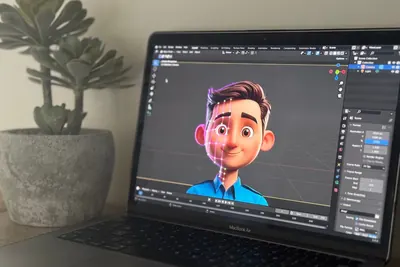

Some of the most ambitious products start as cardboard, tape and a few lines of code. Rapid prototyping is the practice of building quick, rough versions of an idea to test whether it works before investing serious time and money. Innovation labs at large tech companies even run dedicated rapid evaluation teams whose job is to test and kill ideas quickly, so resources go to the few that deserve them.
Why fail fast?
Most new ideas do not work. That is not a problem, as long as you find out early. Failing fast means:
- Lower costs – a failed prototype costs far less than a failed product launch.
- Faster learning – each test answers a specific question.
- Better focus – teams spend their energy on ideas with real potential.
- Healthy culture – people feel safe proposing bold ideas.
A practical rapid prototyping process
- Define the riskiest assumption. What must be true for this idea to work?
- Build the smallest test. A sketch, a 3D print, a clickable mock-up or a simple script.
- Test with real users or real conditions. Lab demos can be misleading.
- Measure honestly. Decide in advance what counts as success.
- Decide: kill, pivot or continue. Celebrate a clear “no” as much as a “yes”.
- Repeat. Each round should be quicker than the last.
Tools that make it easier
- 3D printers and CNC machines for physical parts
- Microcontrollers such as Arduino and Raspberry Pi for electronics
- No-code and low-code tools for software
- Design tools for clickable app prototypes
Common mistakes
- Polishing a prototype that should stay rough
- Testing only with friendly colleagues
- Ignoring negative results
- Treating a prototype as a finished product
The takeaway
Rapid prototyping turns big, uncertain ideas into a series of small, affordable experiments. Teams that fail fast do not fail more often – they succeed sooner. For more on technology strategy, read what should be included in a technology roadmap or explore our Business section.