Functional Fitness: Training for the Movements You Actually Make
Last updated on
“Functional fitness” has been stretched far enough as a phrase to mean almost nothing. It gets attached to kettlebells, to balance boards, to entire gym chains. Underneath the marketing there is a plain idea worth keeping: train the movements you make outside the gym, in roughly the way you make them, and the rest tends to follow.
One thing before the detail. This is general information, not individual advice. If you have a current injury, a heart or joint condition, are pregnant or recently post-partum, or are coming back after a long gap, have the plan checked by a clinician or a qualified coach before you add load.
The patterns that cover a day
Most training frameworks sort everyday movement into six or seven basic patterns. The useful short list is squat, hinge, push, pull, carry and rotate — plus single-leg work, which is common enough to deserve a slot of its own and gets a section below.
Getting out of a low chair is a squat. Lifting a box off the floor is a hinge. Closing a heavy door is a push. Pulling a suitcase down from an overhead shelf is a pull. Walking from the car with two full bags is a carry. Turning to reach the back seat is a rotation.
Programmes that cover all of them leave fewer gaps than programmes built around whichever machines happen to be free. Programmes that cover only one or two — a lot of casual training is push-heavy — tend to produce the pattern most people recognise as “strong in the gym, careful on the stairs”.
Load is the point, within limits
The part that makes people nervous is weight. Bodyweight work builds a base, but the body adapts to demand, and demand means load. Carrying something heavy is the most direct version of this: a loaded carry for thirty seconds asks the grip, the trunk, the hips and the breathing to cooperate, which is the same demand a flight of stairs with shopping makes.
The practical rule is that load should be heavy enough that the last two repetitions require attention, and light enough that the movement does not change shape to accommodate it. If the shape changes, the weight is too heavy for today. That single rule prevents most of the injuries beginners put down to bad luck.
The seventh pattern: one leg at a time
Single-leg work is the most skipped category and the one with the clearest everyday payoff. Walking is a series of single-leg stances, and so is climbing stairs, stepping off a kerb and standing up from a low seat. Step-ups, split squats and standing on one foot while brushing your teeth all count.
If you want one measure of progress that needs no equipment, time how long you can stand on one leg with your eyes open — within arm’s reach of a wall or worktop, with a hand resting on it for the first few attempts. Most people improve quickly. Balance is stubbornly task-specific, though, so the gain shows up mainly in the thing you practised, which is an argument for rotating through several single-leg positions rather than perfecting one.
A session you can repeat
The most common failure is not intensity but variety for its own sake. A different routine every week means nothing is ever loaded long enough to adapt. Keep one short list, repeat it, and change the numbers rather than the exercises.
Warm up first: five minutes of walking or stairs, then one light set of each movement. Start every exercise with a weight you could manage four more repetitions with, and add a little each week until the last two feel like work rather than a struggle. If you have never done a hip hinge, learn the shape unloaded, or have someone watch it once, before you put a bag in your hands.
- Squat: goblet squat or chair squat, 3 sets of 8
- Hinge: Romanian deadlift with a bag or dumbbells, 3 sets of 8
- Push: press-up at whatever angle lets you keep a straight line, 3 sets of 6 to 10
- Pull: single-arm row with a bag or dumbbell, 3 sets of 8 each side
- Single leg: split squat or step-up, 2 sets of 8 each side
- Carry: suitcase carry, 4 lengths of 20 metres, swapping hands
- Rotate: half-kneeling cable or band chop, 2 sets of 10 each side
Allow about forty-five minutes, twice a week, or run it as a circuit — one set of each in turn — if you are short of time. Two sessions covering every pattern produce more durable change than five sessions covering two of them.
You do not need a gym for this
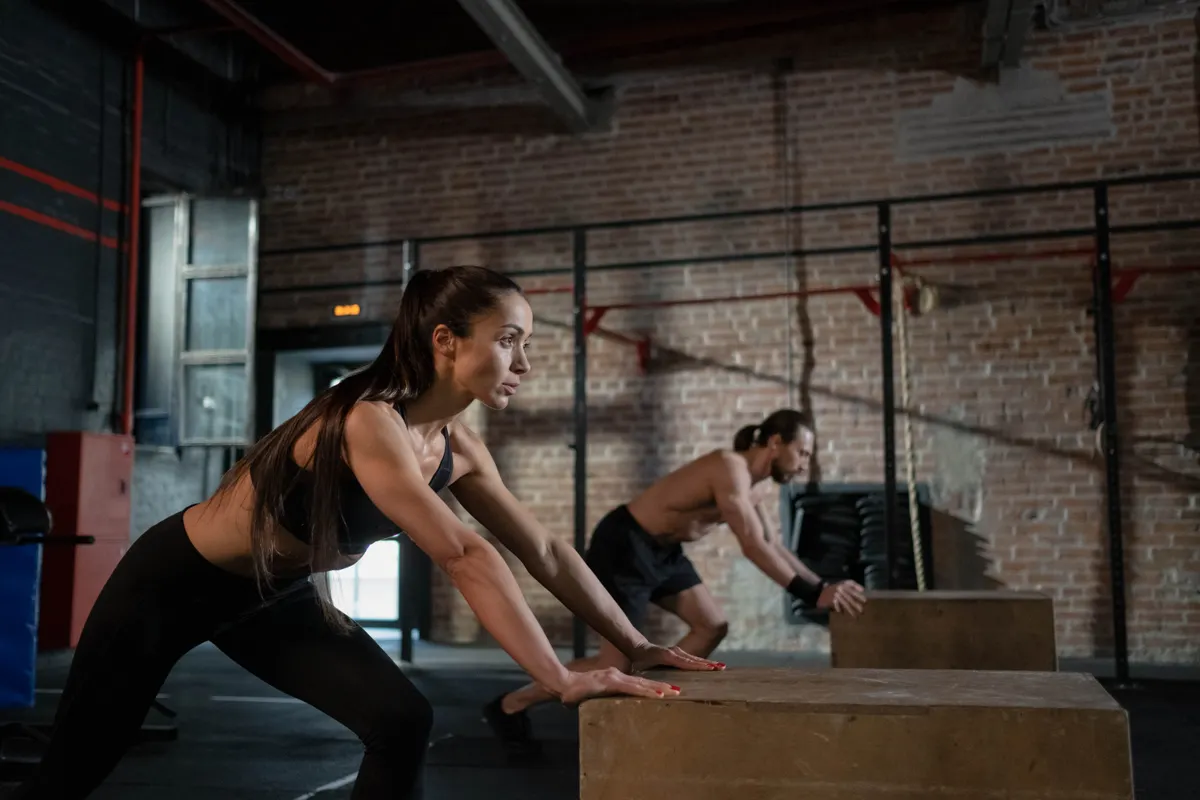
A hinge can be trained with a bag of rice. A carry needs two shopping bags. Press-ups scale from a wall to the floor. A chair gives you squats, step-ups and a surface for single-leg work.
What a gym genuinely adds is progressive load: more weight, in small steps, without buying more rice. If you train at home, that is the constraint to plan around. Make the movement harder every few weeks — a slower tempo, a longer pause at the bottom, one leg instead of two — and the lack of a weight rack stops mattering.
When it stops being a training question
Pain that persists, joints that give way, or breathlessness out of proportion to the effort are not programming problems, and no amount of pattern-based training addresses them. Those belong with a clinician, not with a coach, and the sooner the better.