
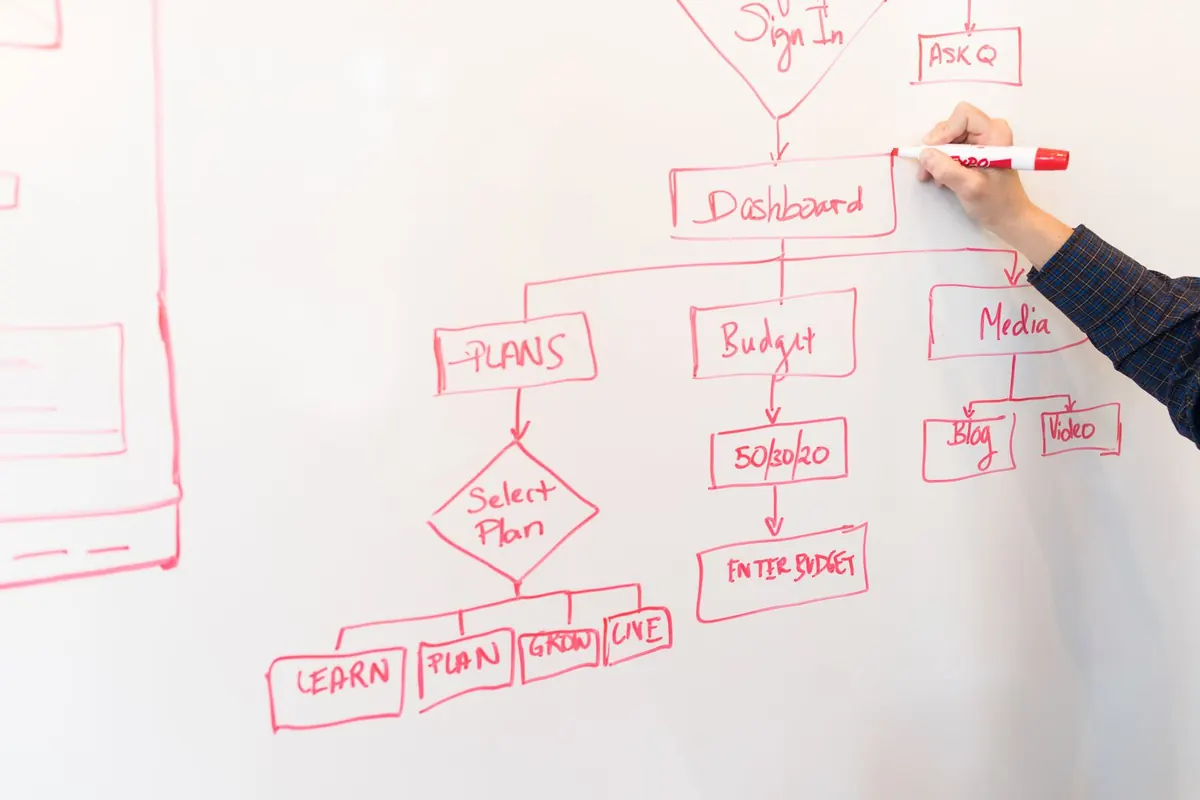
Business process reengineering (BPR) means analysing existing work processes and redesigning them to make them far more efficient. It often uses new technology to simplify or streamline workflows.
Reengineering vs. improvement
BPR is different from business process management or continuous improvement. Those approaches refine existing processes step by step. Reengineering questions whether the process should exist in its current form at all, and often starts again from scratch.
Why it is challenging
- Resistance to change. Employees may be attached to long-standing ways of working.
- Time and cost. Redesigning core processes is a significant investment.
- Risk. Radical changes can disrupt operations if they are poorly managed.
Keys to success
- Management commitment – leaders must champion the change.
- Stakeholder buy-in – involve employees early and explain the “why”.
- Clear goals – define measurable targets for cost, speed and quality.
- The right technology – choose tools that support the new process.
- Careful rollout – pilot, measure and adjust before scaling up.
The payoff
Done well, reengineering lowers costs, makes employees’ work easier and more efficient, and can significantly improve a company’s profitability.
For another way to streamline operations, read about enterprise-level tools for inventory management.